28 cards · 4 sections
The Original Deck
One man at four ages, shown out of order, each section a different version of a hand. The deck ends where life begins; First Grip restarts the cycle.
The Cross
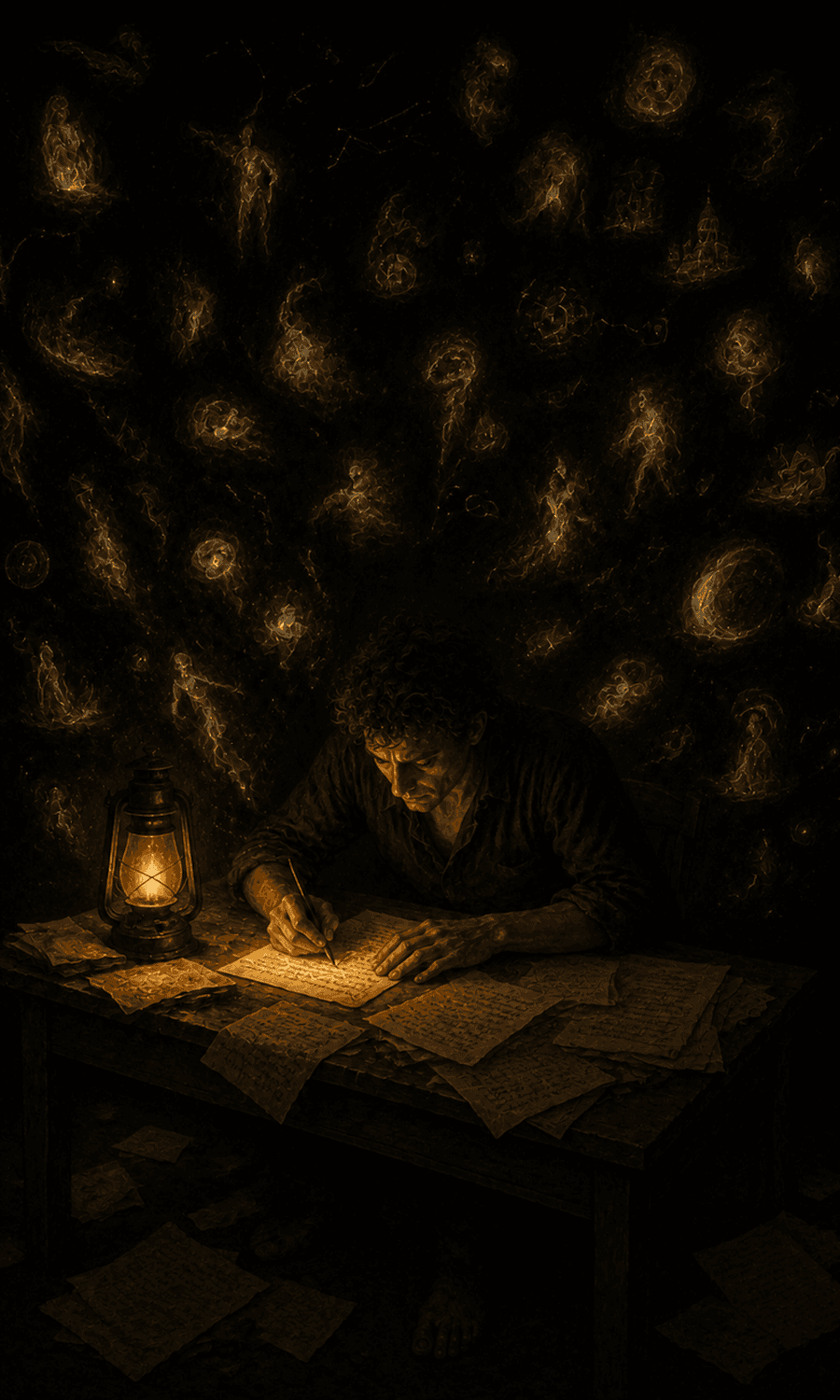
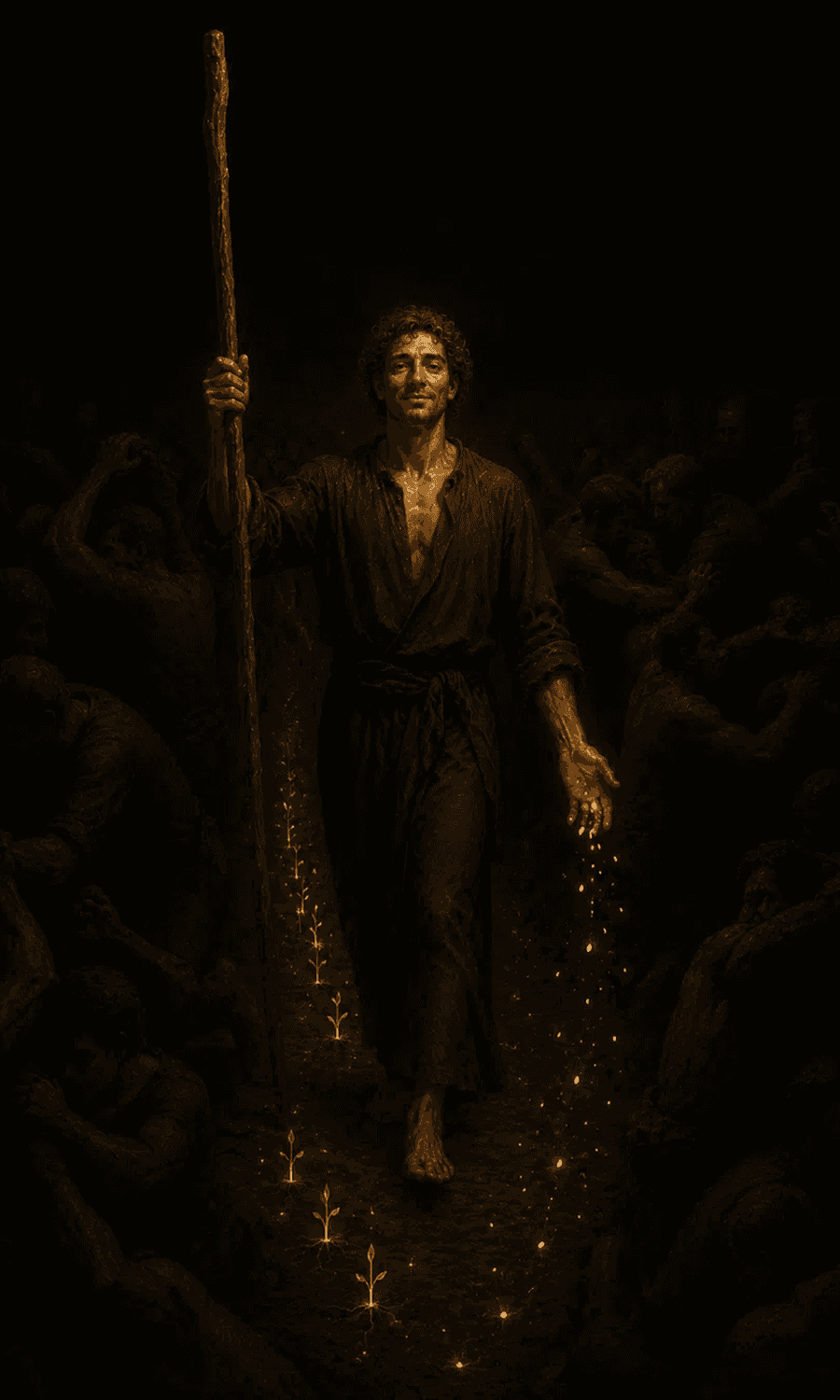
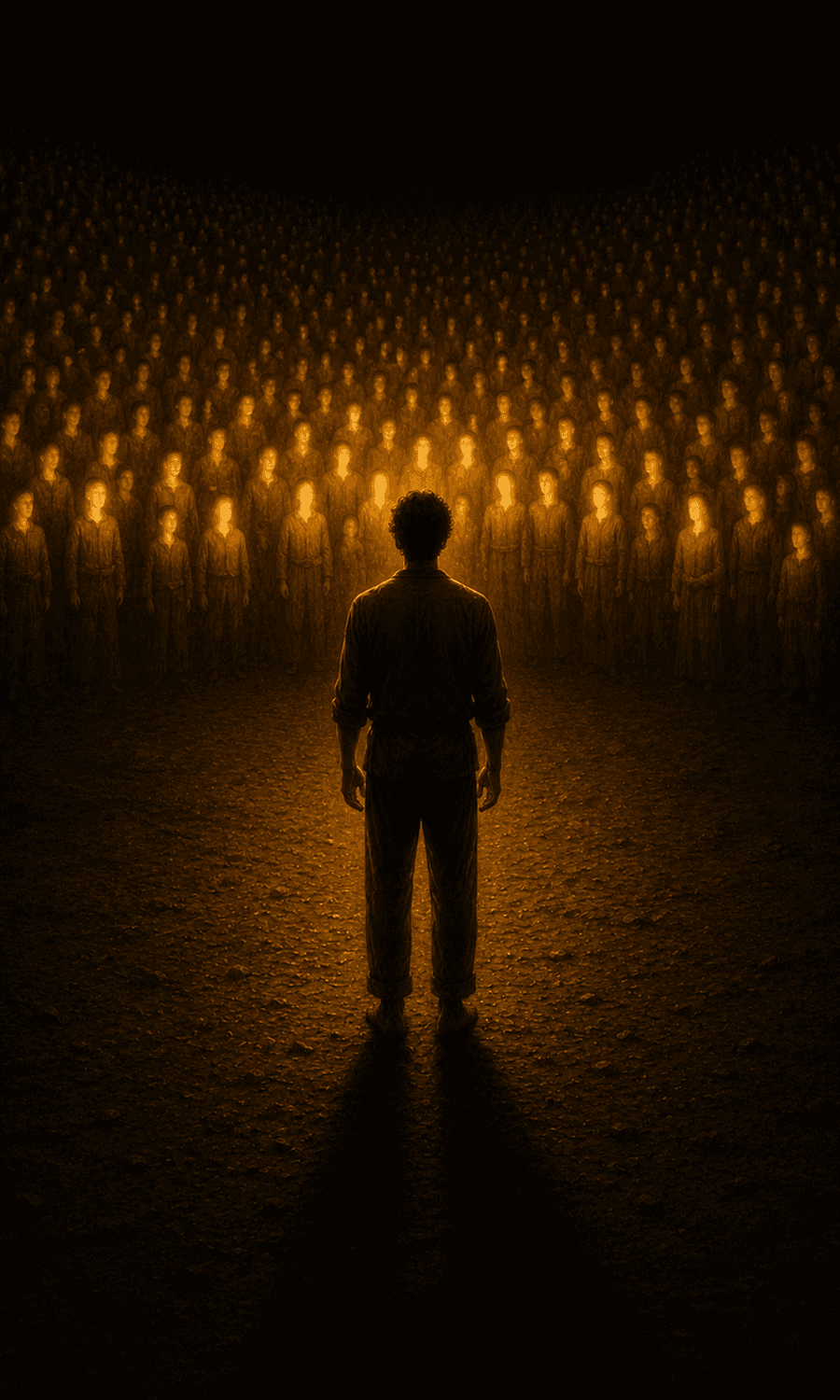
Fire · past / testimony · a man in his mid-30sA hand that gave without looking backRead about The CrossClose
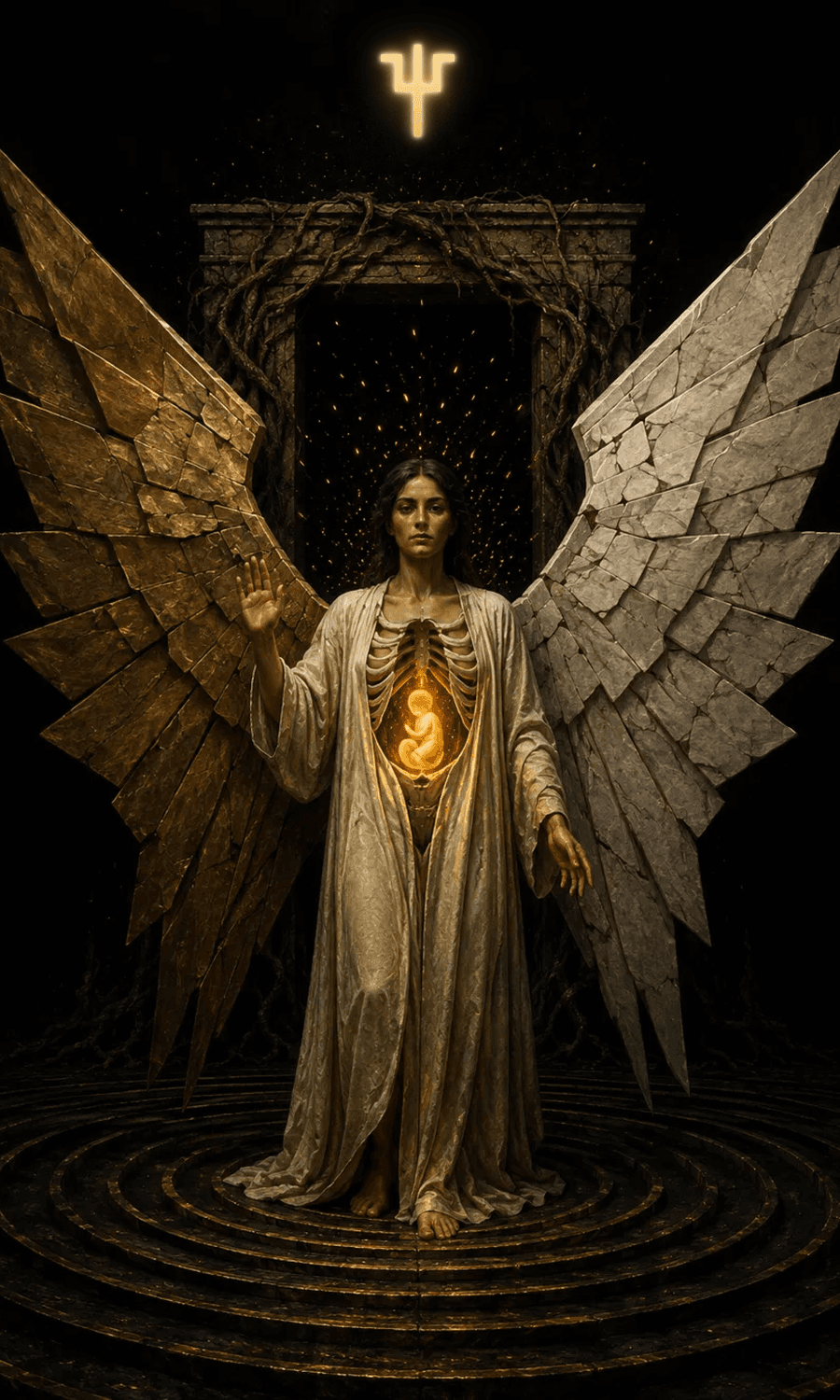
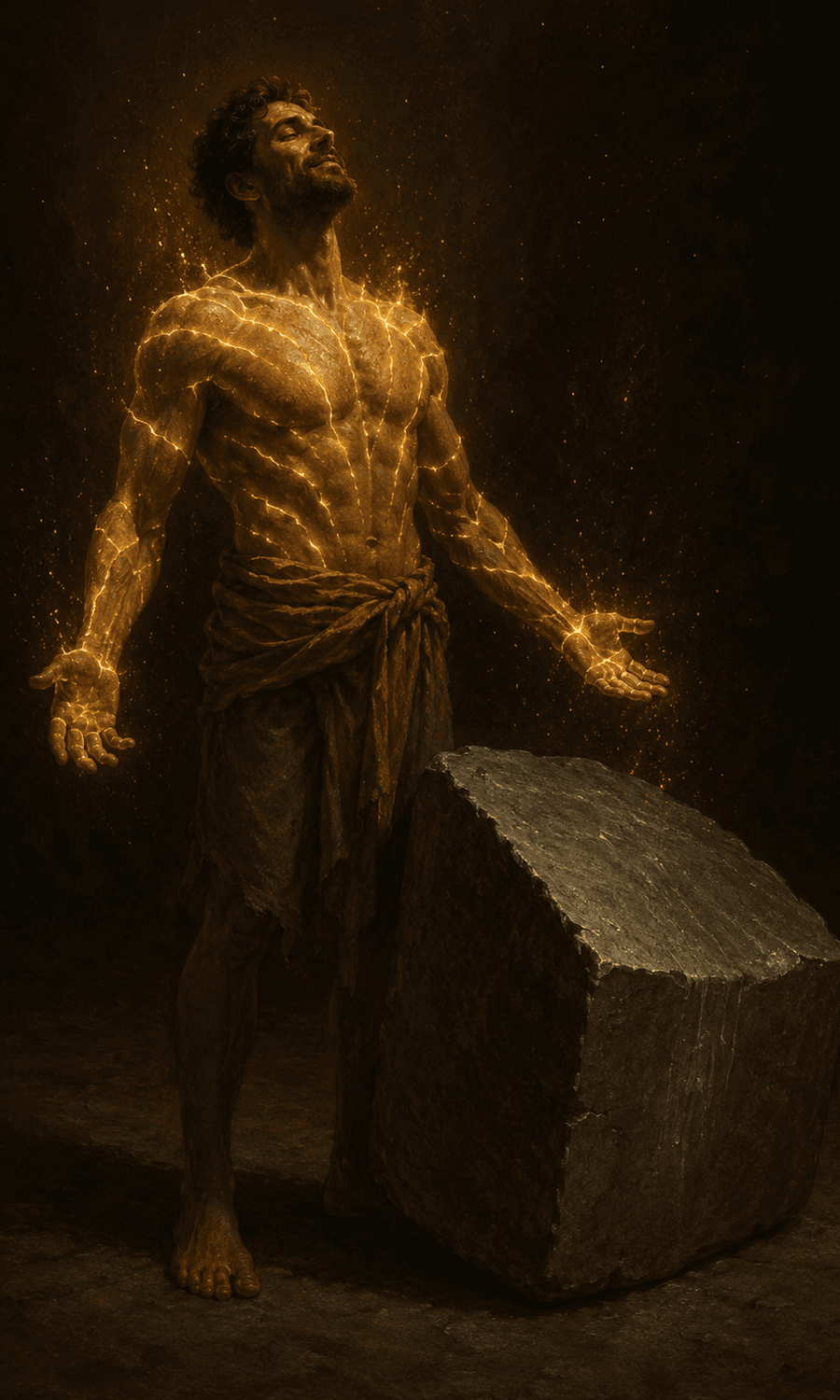
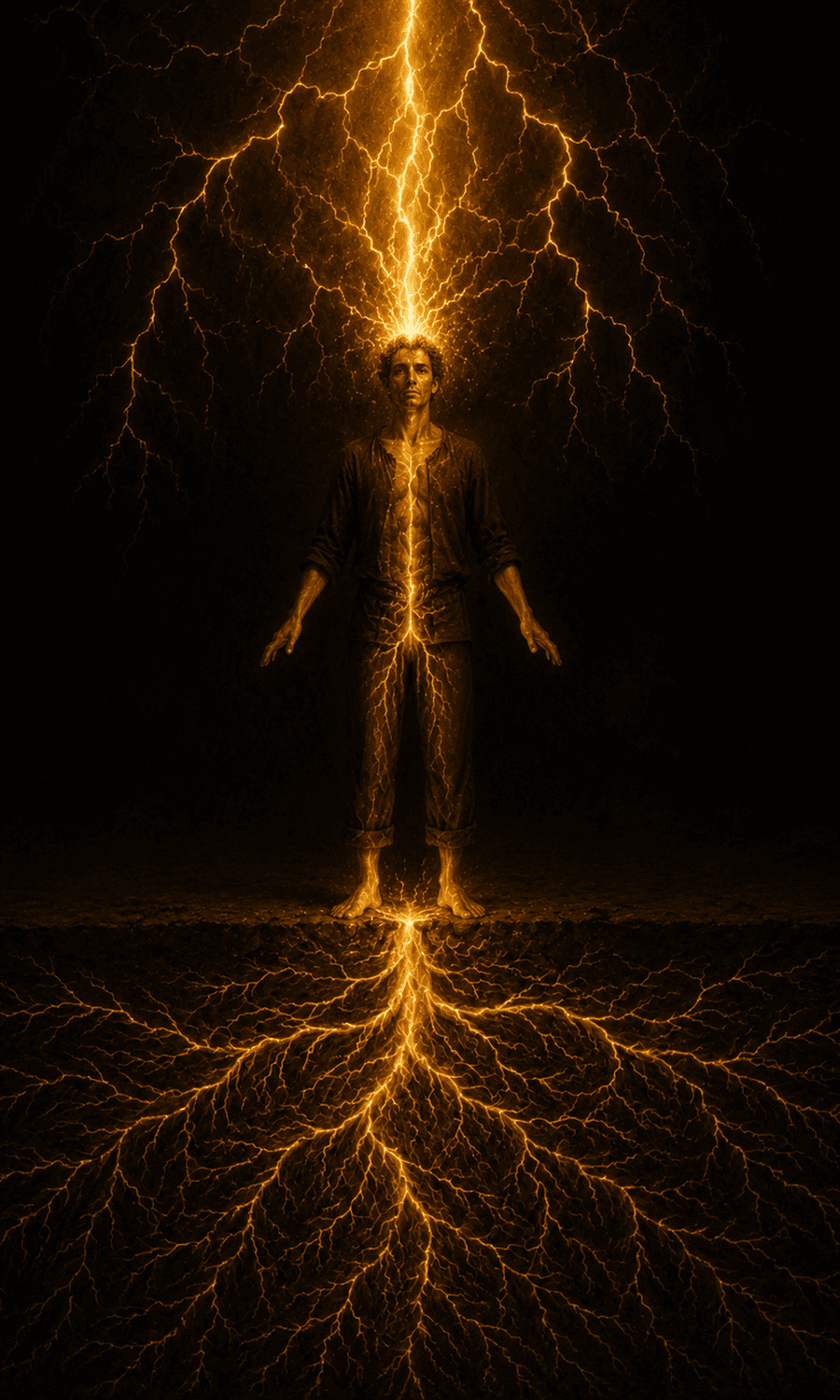
This is a record of a threshold already crossed. Every card sits on the far side of a long passage through the dark — a decade of weight, of silence, of gifts held down — and none of them treat that passage as damage. The deck's central claim is that the burden was the training: what pressed on you shaped the channel, what you buried grew roots, what looked like the wrong road was the only road. Nothing here is redeemed after the fact. It was always already the preparation, and the only thing that changed is that you can finally see it. What follows from that is a set of cards about conductance rather than possession. The figures don't own their light — it moves through them, from above to below, from inside to outside, from one mouth into two languages, from a hand into the ground, from a shaft of light onto upturned faces. To carry something is to be worn into a shape by it, and that shape is what lets the thing pass. The deck asks the same question at seven angles: what came through you, what did it cost to let it, and who is standing in the light on the other side.
These cards are testimony, not diagnosis. Each one shows something that already passed through a person and the mark it left in passing. The cross here is not the burden you are still under; it is the shape that burden pressed into you, which turned out to be the opening the light needed. This section asks what came through you, what it cost to let it pass, and who is standing in the light on the other side — and it insists the answer was never available until after the crossing.
Spread · The Threefold Passage
Three questions, laid left to right, that together account for anything moving through a person.
- The first asks what is arriving — the current, the vision, the weight, the gift, the thing you did not choose and cannot refuse.
- The second asks the price of conductance: what is worn down, held back, translated, buried, or set aside so the thing can pass rather than stall inside you. Every channel is cut by friction, and this position names the friction honestly, without treating it as damage.
- The third turns the reading outward and asks the question the first two exist to serve — who stands in the light. Not what you gain, but who is lit. The spread refuses to let the passage terminate in the self; it insists that what moves through you is headed somewhere past you, and that the cost is only legible once you can see who receives it.
Deal three cards face up in a horizontal line, left to right, and read them in order — arrival, cost, recipient — allowing each to condition the one that follows rather than interpreting them separately.

The Interim
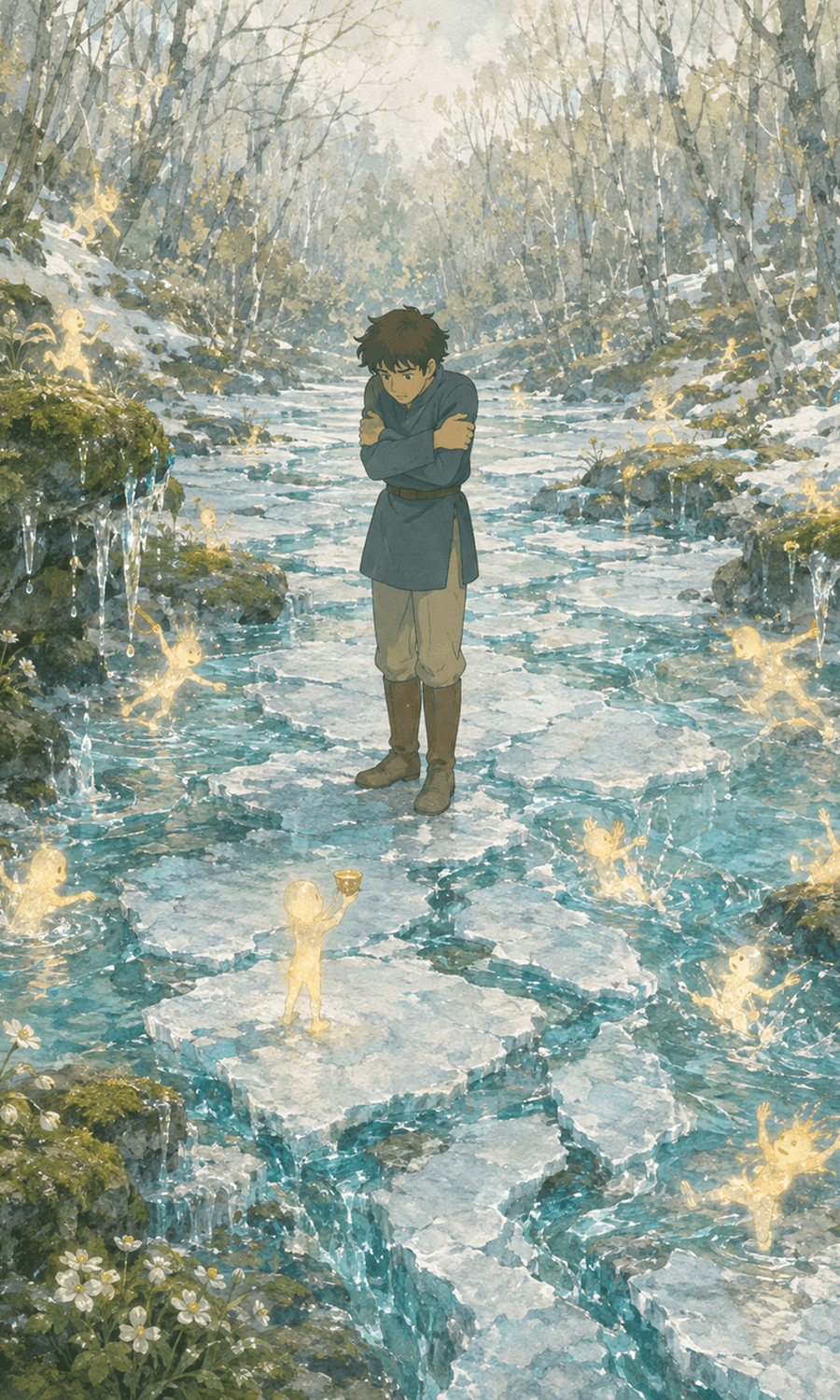
Water · present, unresolved · a man in his early 20sA hand that could not takeRead about The InterimClose
The first section was testimony — a record of what had already passed through a person and the marks it left in passing. This one is the opposite tense. Nothing here is finished. Every card is a present moment held open, and the deck's argument shifts from what was it for to a harder question: what do you do with your hands now that the weight is gone. The trap of this section is that healing is not solemn, and that is precisely what makes it difficult. The water is warm. The sprites are unbothered. Nothing is being withheld and nothing is demanded. What stands in the way is entirely internal — a person so long organized around a condition that the cure asks them to give up an identity in exchange for something as unserious as ease. So the figure hesitates, resists, over-works, looks away, and does not take the cup that is quietly held out in card after card. The section does not resolve this. The tension is the point, and it is carried forward into air and earth rather than settled here.
These cards are the interval, not the answer. Each shows something freely offered and a person who cannot yet take it — not from stubbornness or malice, but because accepting would mean the suffering was not load-bearing after all. The water gives without condition; the figure holds himself apart. This section asks what is being offered, what it would cost to accept, and who you would have to stop being — and it refuses to answer, because the answer is not yet available.
Spread · The Burial
Four cards, laid one directly on top of another, alternating axis:
- The first horizontal,
- The second vertical across it
- The third horizontal again, the fourth vertical — so that a rough cross builds and then disappears beneath itself. Each card covers the one before it, and by the fourth only the last is visible. That concealment is the point: this section is about a thing offered and not taken, and the spread makes you watch the offer get buried under whatever you put down next. The horizontal cards are what you are doing — the visible behavior, the errand, the effort, the reaching that stops short. The vertical cards are what sits underneath it — the reason the behavior is necessary, the thing being protected. Read from the top down, in reverse order of placement, so the most recent covering comes off first and the oldest is reached last. What you find at the bottom was never hidden from anyone but you.
Lay all four cards face up or face down, depending on what you feel is best. Then read from the top: look at the fourth card, sit with it, and physically lift it away before turning/looking at the third. Continue down through the stack, removing each card as you finish with it, until only the first remains.






The Holding
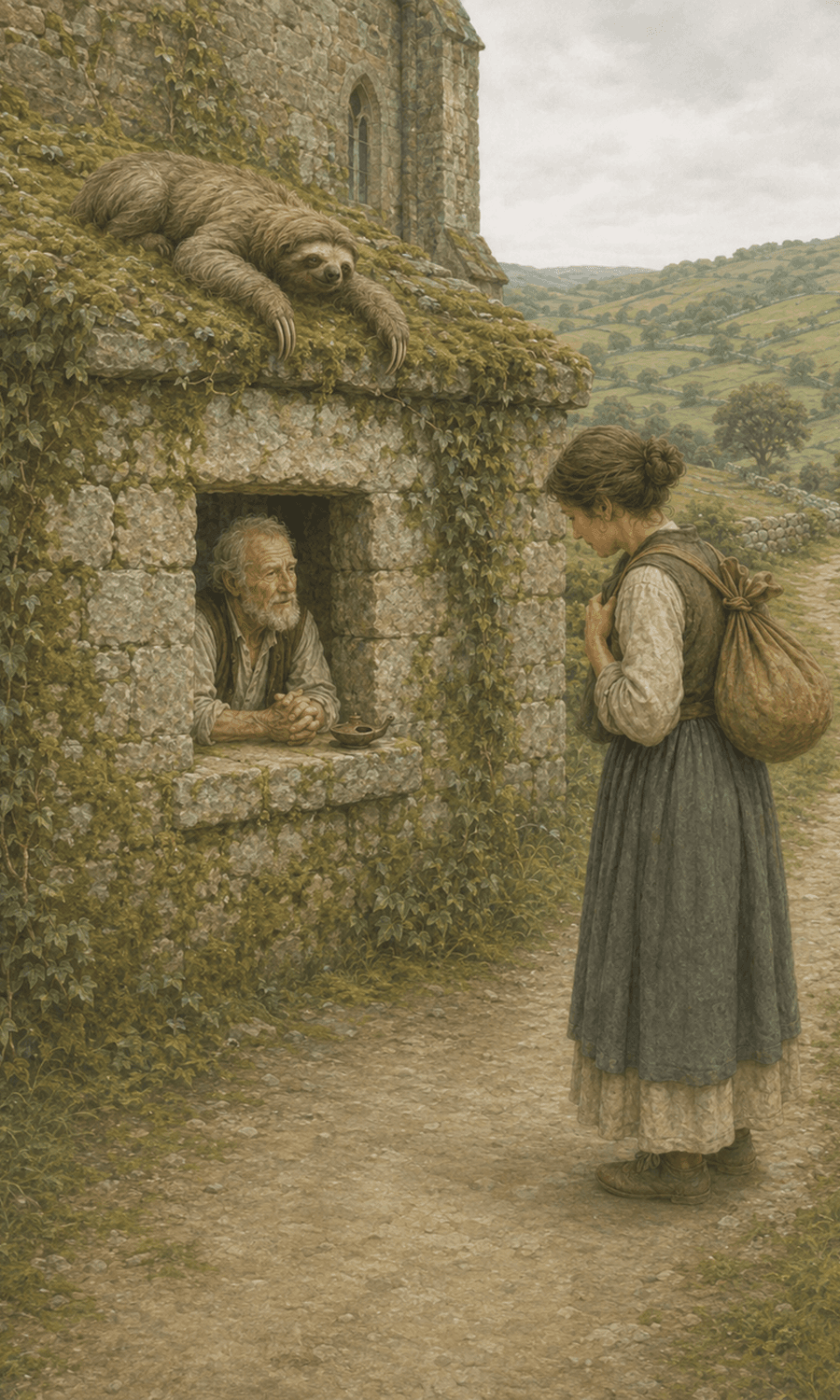
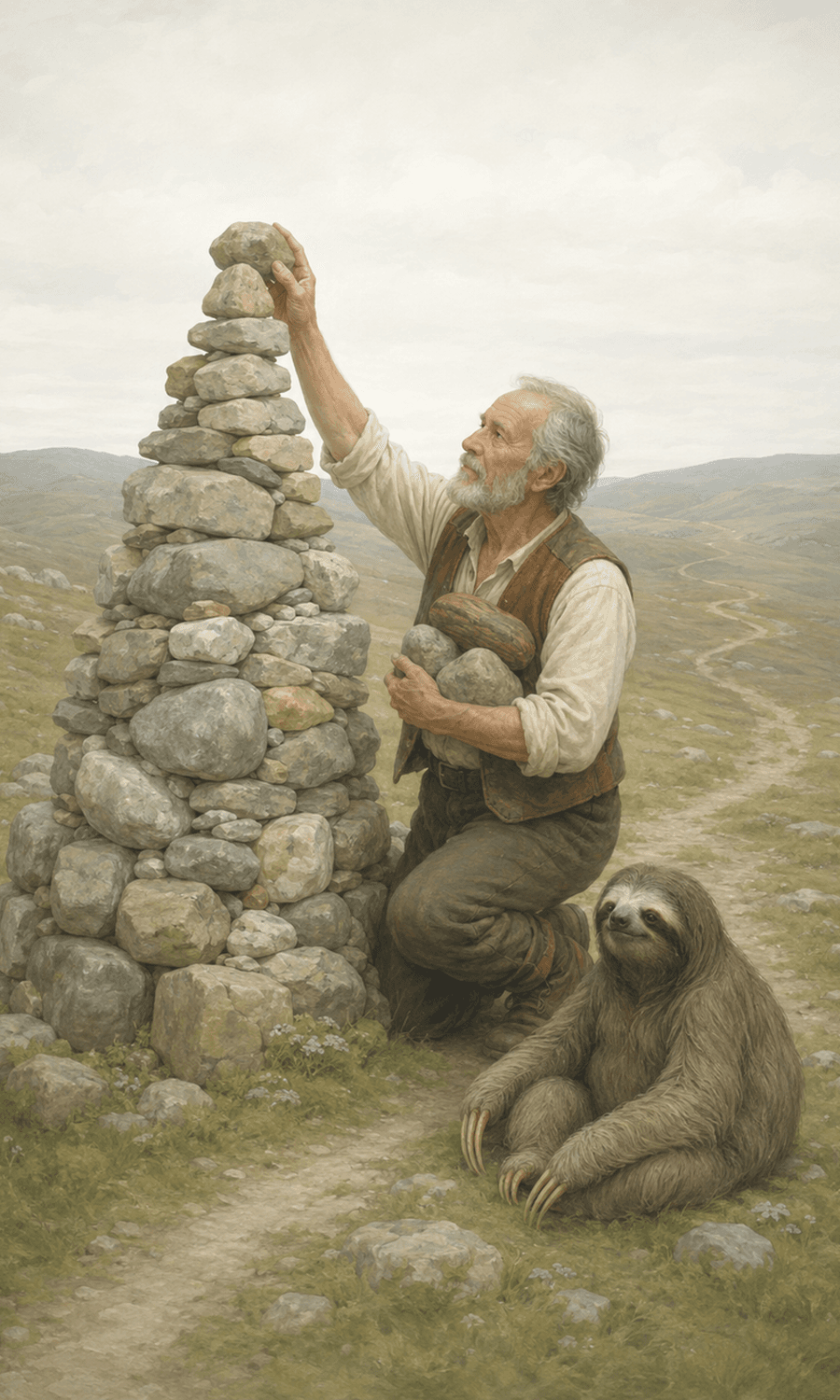
Earth · habitual · a man in his 70sA hand that could not releaseRead about The HoldingClose
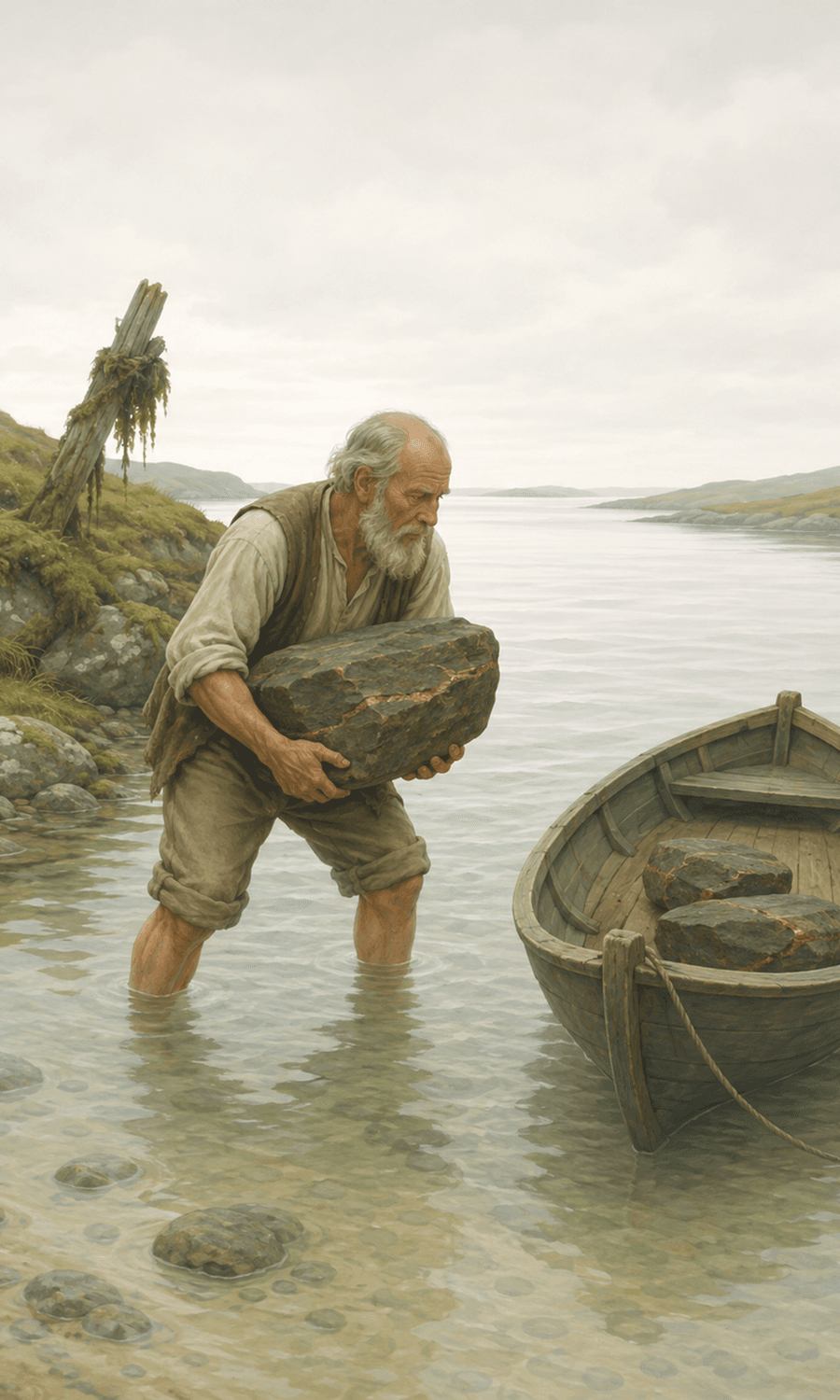
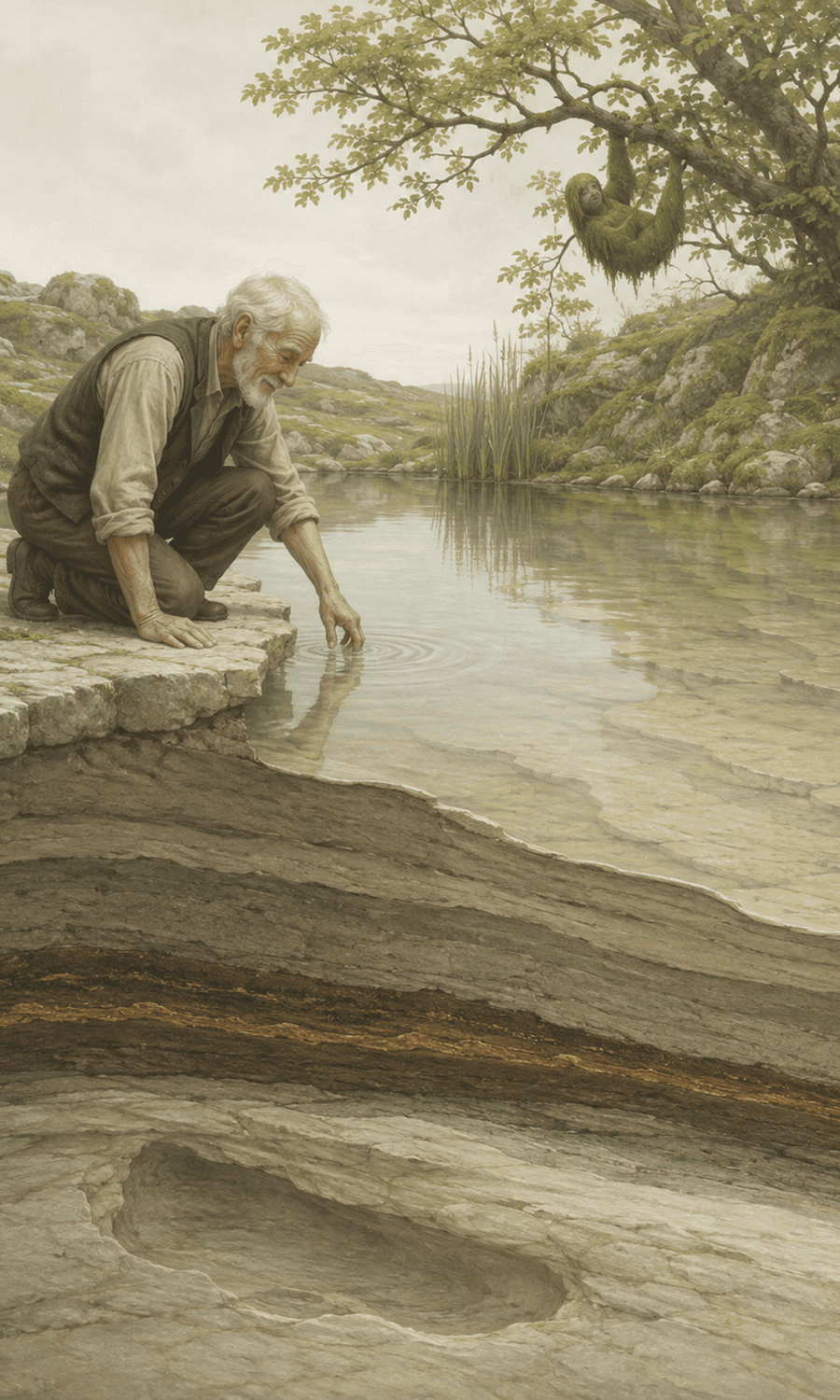
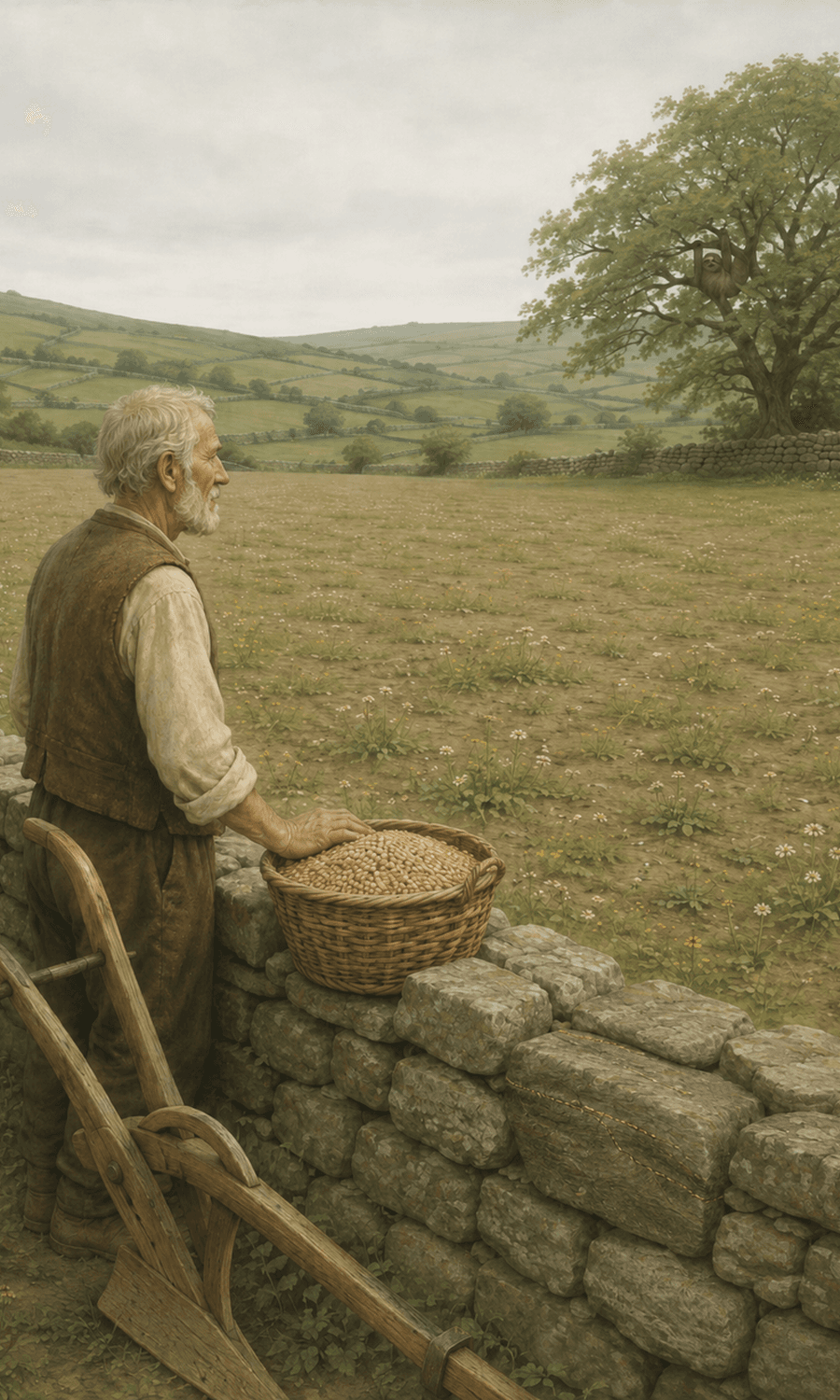
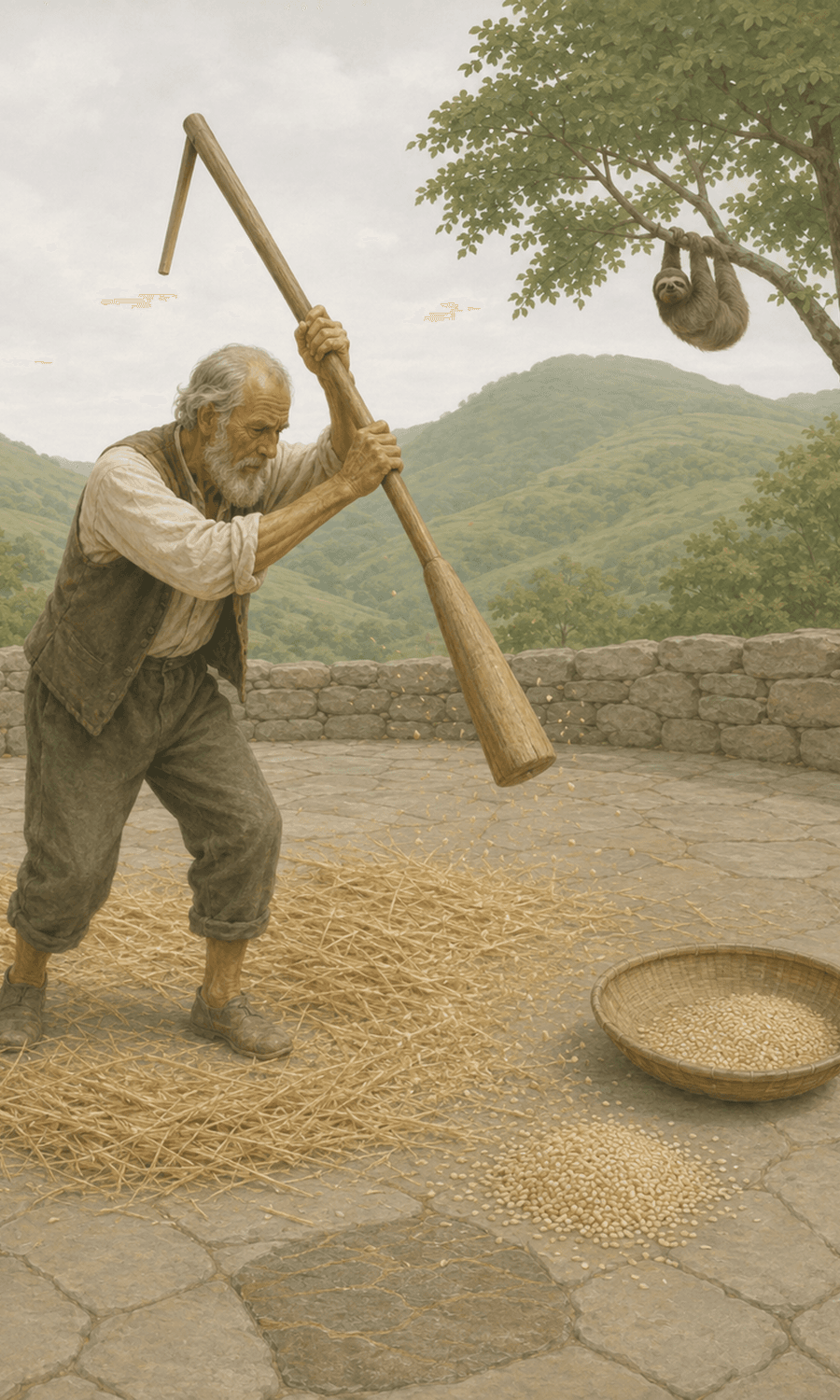
The first section was testimony about a crossing already made. The second was an interval held open — a man beside water he could not enter, refusing what was offered because taking it would mean the suffering had not been load-bearing after all. This section is what happens when that man finally becomes solid. He stops moving, and things begin to settle out of him and around him. Weight arrives, some of it carried in deliberately and some of it simply accumulating because he held still long enough. He acquires ground, tools, a wall, a name on a piece of paper. And having spent a lifetime unable to receive, he discovers he is now unable to release. That is the turn this section makes. Where the second was a hand that would not open to take, this one is a hand that will not open to give — the same closure, reversed. He counsels travellers through a window he could climb out of and doesn't. He holds a basket of seed over ground that would grow it. He builds a marker for a road he will not walk. None of that is failure; it is what stability costs, and the section neither apologises for it nor resolves it. Something slow and patient waits at the edge of every card, becoming more visible as he becomes more still, until at the end it is sitting beside him. That, and not the deed, is what he actually got.
These cards are the habitual tense — not what happened, not what is happening, but what is done, again, as practice. Mass is not the enemy of light; it is what light has to be held in, and nothing can be received accurately by a system still refusing to settle. But the same weight that makes reception possible makes release difficult, and this section will not pretend otherwise. It asks what you have built, what you are keeping, and what it costs to stay — and it leaves the hand closed, because opening it is not yet available.
Spread · The Enclosure
Four cards laid face up around an empty center, placed and read in order — left, then top, then right, then bottom — so that the reading travels clockwise and closes where it began. Nothing is hidden here and nothing is turned over; everything is visible from the moment it is laid, and the work is not discovery but accounting.
- The first position is what was taken on, the weight brought in deliberately or accepted without argument.
- The second is what got built with it, the visible structure, the part of the arrangement that others can see from the road.
- The third is what it keeps out, and this position is not gentle — every wall has an outside, and the reading names what is standing there.
- The fourth is what holds the whole thing up, the foundation so long in place that it has stopped being noticed. What sits in the middle is never drawn, yet.
Lay the four cards face up in the order shown, reading each one fully before placing the next, so that every card is set down already knowing what came before it. When the circuit is closed, look at the empty center and name what the four cards have been surrounding — and if the answer arrives easily, ask whether the walls could have been fewer.

The Overture
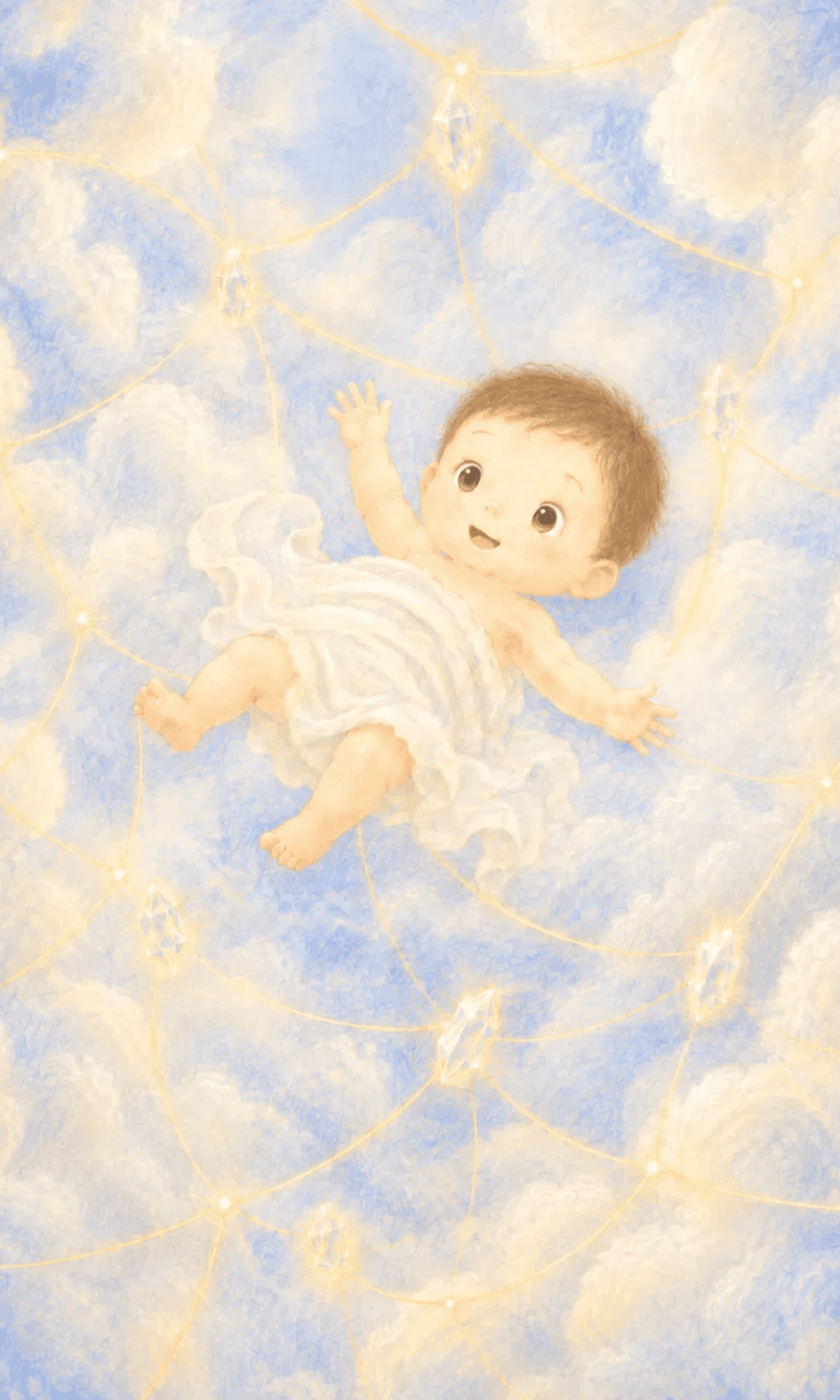
Air · before · an infantA hand that has not yet learned to closeRead about The OvertureClose
The first section was testimony about a crossing already made. The second was an interval held open, a man beside water he could not enter. The third was what happened when he finally became solid — and discovered that the same weight which let him receive had made it impossible to let anything go. Three sections, three versions of a hand that will not open: one that gave without ever looking back, one that could not take, one that could not release. This section is a hand that has not yet learned to close. Everything the others labored toward happens here without effort and without merit — the cup taken, the threshold crossed, the weight set down — because nothing in the child is yet capable of refusal. He is carried, fed, warmed, and set down by something he cannot see and does not know to thank. The old man does not appear; he is the one being succeeded, and all that remains of him is a pair of weathered hands entering at the edge of the frame. Nothing here is achieved. That is the point, and it is also the difficulty: this section comes last and describes what came first, the way an overture is written once the composer knows how the work ends. The final card is the hand closing for the first time — which is not a fall, but it is the beginning of everything the other three sections describe.
These cards are the open hand, and they are not an achievement. The child does not release what he holds; he has not yet learned to close. Everything the other sections labored toward happens here without effort and without merit, because nothing in him is yet capable of refusal. He is carried, fed, warmed, and set down by something he cannot see and does not know to thank, and this is not a lesser way to receive. It is the only way anything in this deck has ever actually been received. The section asks what you were before you learned to hold, what it costs to be that again, and whether the hand that gives freely is the one that never learned to grip or the one that finally forgot how — and it does not say which of those two is in the room.
Spread · The Overture
One card, face up, nothing else. No positions to assign, no order to read in, no second card to lean on or explain it with. The question is asked once and asked plainly — what do I need to rediscover, where does my power actually come from, what was true before I learned to work for it — and the answer arrives whole or not at all. Every other spread in this deck builds something: a passage, a burial, an enclosure. This one builds nothing, because the section it belongs to is about what you were before you were capable of building, and a single card is the only shape that can say so. Its power is that there is nothing to arrange, and its difficulty is the same thing: whatever is on the card is the whole answer, and there is no fifth position to hold your objection in.
Ask the question aloud, draw one card, turn it face up, and stop — do not draw a second, do not draw a clarifier, and do not lay another spread around it. Sit with it as long as it takes, and if the answer seems too simple, consider that the simplicity may be the answer.